
Why Line Length Matters in Water Damage Restoration Web Design
Water damage restoration companies operate in a high-stakes environment where every minute counts. Your website needs to communicate urgency, expertise, and availability without forcing visitors to work for the information. One of the most overlooked design principles that directly impacts readability and conversion rates is line length—the number of characters that appear in a single line of text.
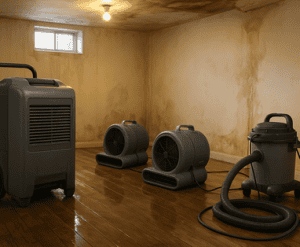
Research consistently shows that optimal line length falls between 50-75 characters per line for body text. Lines that are too long force readers to work harder, losing their place as their eyes travel back to find the start of the next line. Lines that are too short create a choppy, exhausting reading experience that drives visitors away before they pick up the phone.
The Water Line Metaphor: Flow and Function
Think of your website’s text layout like water flowing through pipes. When water moves through properly sized lines, it reaches its destination efficiently. When the pipes are too wide or too narrow, you get problems—reduced pressure, backflow, or complete system failure.
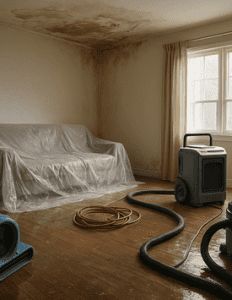
Your content needs the same careful calibration. A restoration company website serves emergency customers who are stressed, overwhelmed, and scanning for solutions fast. If your line length forces them to hunt for information or re-read sentences, they’ll move to a competitor’s site within seconds.
Desktop vs Mobile Line Length Standards
Desktop displays typically accommodate 60-70 characters per line comfortably. This translates to roughly 12-15 words per line at standard font sizes. Mobile devices require shorter lines—usually 35-50 characters—because screen width is limited and users hold devices closer to their faces.
The mistake many restoration companies make is using responsive design that simply scales content without adjusting line length. A paragraph that works perfectly on desktop becomes an unreadable wall of text on mobile, or worse, creates awkwardly short lines that break every 3-4 words.
Implementing Line Length Controls
Setting maximum width on text containers is the primary method for controlling line length. Use CSS max-width properties measured in either pixels or ems. For restoration company websites, a content container of 600-700 pixels wide typically delivers optimal results on desktop screens.
Key implementation strategies include:
- Setting max-width on article containers, not full-page wrappers
- Using relative units (ems or rems) that scale with font size changes
- Testing actual character count, not just visual appearance
- Adjusting line height (leading) to complement line length—longer lines need more vertical space
- Breaking content into scannable sections with headers and white space
Visual Hierarchy for Emergency Services
Water damage restoration websites need immediate visual hierarchy. Visitors should be able to identify your phone number, service area, and availability within three seconds. Line length plays directly into this goal.
Short, punchy headlines with deliberate line breaks create stopping power. Service descriptions with controlled line length improve comprehension. Testimonials formatted with proper text width build trust faster. If you’re looking for examples of restoration websites that balance design principles with conversion optimization, check it out to see these concepts in action.
Testing and Refinement
Line length isn’t a set-it-and-forget-it decision. Track metrics like time on page, scroll depth, and conversion rates across devices. Run A/B tests comparing different max-width settings. Pay attention to which pages generate phone calls and form submissions.
Common Line Length Mistakes
Full-width text blocks that stretch across entire browser windows create exhausting reading experiences. Inconsistent line lengths between sections make your site feel unprofessional. Ignoring mobile optimization costs you emergency calls from customers searching on phones while standing in flooded basements.
Your website is often the first impression potential customers have of your restoration company. Line length might seem like a minor detail, but it directly affects whether stressed homeowners trust you enough to call. For homeowners dealing with water damage and related housing concerns, resources like HUD Healthy Homes provide valuable information about maintaining safe living environments. Get the fundamentals right, and your website becomes a lead-generation asset instead of a digital placeholder.
